Practical Ways to Reduce Everyday Stress in 10 Minutes or Less
Most advice about stress assumes you have time you don't have: a long bath, a weekend away, an hour of exercise. On an actual Wednesday, with a full inbox and a school pickup at 3:30, what you need is something that fits into the gap between two other things.
This guide is a menu of short resets, none longer than ten minutes, plus a simple way to choose between them. They won't remove the source of your stress, and they aren't a treatment for anything. They're small ways to lower the pressure while you deal with what's in front of you.
Start by Noticing How Your Stress Shows Up
Stress doesn't feel the same for everyone. For some people it's physical: a tight jaw, tense shoulders, a restless body. For others it's mental: racing thoughts, a scattered feeling, difficulty deciding. For others it's more of a drained, flat feeling. The right reset depends on which one you're dealing with, so it's worth taking a few seconds to check in before you pick.
The Two-Minute Resets
These fit almost anywhere: at a desk, in a parked car, in a hallway between meetings.
- Slow breathing: breathe in slowly through your nose, then let out a longer breath. The National Center for Complementary and Integrative Health describes slow, deep breathing as a simple relaxation technique, and it needs no equipment.
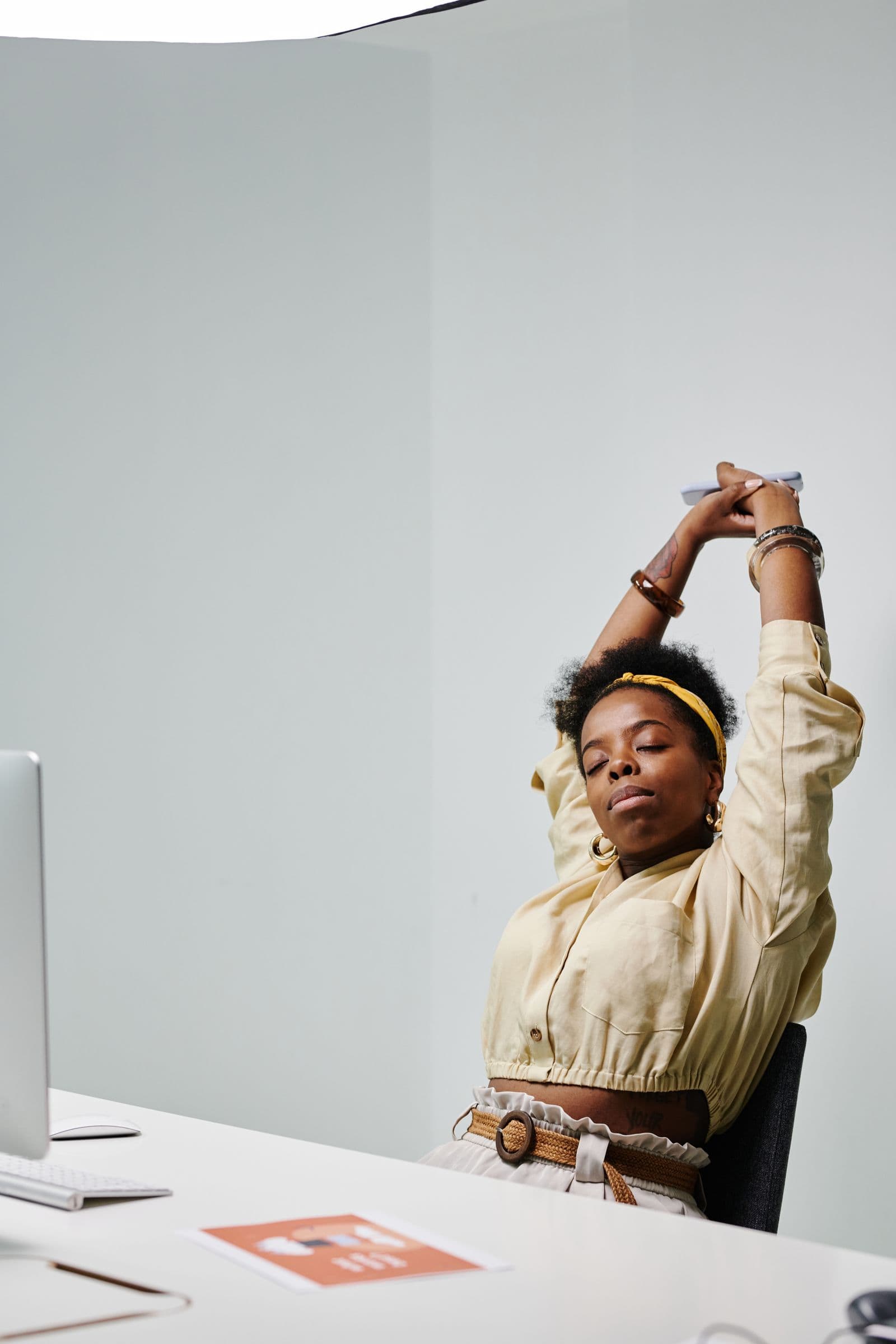
- A quick stretch: roll your shoulders, gently tilt your head from side to side, and reach your arms overhead. The CDC lists stretching among relaxation techniques for managing stress.
- A change of scenery: step outside or stand by a window for two minutes. Spending time outdoors is also on the CDC's list of stress-management suggestions.
- A glass of water and something to eat if you haven't: the National Institute of Mental Health recommends regular, healthy meals as part of managing stress, and skipped meals rarely help a hard day.
- Screens down: if the news or social media is feeding the stress, the CDC's advice is to limit it. Close the tab for now.
The Five-to-Ten-Minute Resets
When you have a little longer, these tend to give you more room to breathe.
- A short walk: the National Institute of Mental Health notes that 30 minutes of walking a day can boost mood and improve health. A ten-minute walk is an easy way to start that habit, and a good option when you can't sit still. A short walk to clear your head has a simple version built for exactly this.
- Write it out: keeping a journal is on both the CDC's and NIMH's stress-management lists. Five minutes of unsorted writing gets tangled thoughts out of your head. Journaling for beginners explains how to start.
- Talk to someone: the CDC suggests talking with people you trust about your concerns. A brief call or text to a friend counts.
- Name three specific good things: the CDC lists daily gratitude, and NIMH's advice is to be specific ('the neighbor held the door and asked how I was') rather than general.
- Reset one small thing: clearing a single counter or closing ten browser tabs gives many people a small, concrete sense of progress.
Match the Reset to the Kind of Stress
If you're not sure which to try, this is a rough guide. It isn't a rule; notice what works for you and adjust.
- Wound up and restless: movement first, such as a brisk walk or a stretch, before anything that requires sitting still.
- Scattered or racing: write it down, then choose one next step. What to do when you feel overwhelmed walks through this in detail.
- Tense in your body: slow breathing and gentle stretching.
- Drained or flat: water, food, fresh air, and rest before trying to be productive.
- Isolated: a short conversation with someone you trust.
What a Day With Three Small Resets Can Look Like
None of these needs to be dramatic. Imagine a workday where you do three of them: two minutes of slow breathing and a stretch before your first meeting, a ten-minute walk outside after lunch instead of eating at your desk, and a five-minute brain dump on paper when the afternoon starts to feel scattered. That's under twenty minutes in total, spread across a day you were already going to have. The change isn't that the day becomes easy. It's that the pressure doesn't have to build all the way to the evening before you do anything about it.
If that sounds like too much, start with one. Pick the reset that feels most natural, do it at the same point each day for a week, and only then add another.
What Small Resets Can and Can't Do
A ten-minute reset can lower the temperature on a hard day. It can't remove a genuinely unreasonable workload, a difficult situation, or ongoing worry. The CDC notes that chronic stress can make health problems worse, which is a reason to take long-running stress seriously rather than just coping with it.
Relaxation techniques are generally considered safe for healthy people, according to NCCIH, but some people occasionally have negative experiences such as increased anxiety or intrusive thoughts. If a technique makes you feel worse, stop, and consider talking with a healthcare provider about what would suit you better.
Frequently Asked Questions
You don't need a long break to take the edge off a stressful day. Notice how your stress shows up, pick a two-to-ten-minute reset that matches it, and keep a short menu ready for the days you can't think straight. And treat persistent stress as something worth talking to a professional about, not something to push through alone.
When to Get Support
Everyday stress is a normal part of life, and small resets can help. If stress feels constant, keeps you from sleeping, or has lasted for weeks despite your efforts, consider talking with a doctor or a licensed mental health professional. NIMH's guide explains how to find help.
Sources
- CDC — Managing Stress
- National Institute of Mental Health — I'm So Stressed Out! Fact Sheet
- National Institute of Mental Health — Caring for Your Mental Health
- NCCIH (NIH) — Relaxation Techniques: What You Need To Know
General wellness information, not medical advice. Talk with a qualified healthcare professional about your own situation.
For a fuller set of stress-relief routines you can repeat daily, the Mental Wellness Guide includes calm-habit routines and a matching planner and 30-day system.
See the Mental Wellness GuideRelated Articles
What to Do When You Feel Overwhelmed: A Step-by-Step Reset
Too much to do and no idea where to start? Here's a calm, practical reset you can run through in about fifteen minutes, plus how to tell when it's time to ask for support.

Simple Breathing Exercises to Calm Down in Five Minutes
Slow breathing is one of the simplest relaxation techniques there is. Here are three easy exercises, a five-minute routine, and what to do if breathing practice makes you feel worse instead of calmer.

Journaling for Beginners: How to Start (and What to Write)
Journaling doesn't need beautiful handwriting, a fancy notebook, or a lot to say. Here's how to start with five minutes, choose a format that suits you, and get past the blank page.