Simple Breathing Exercises to Calm Down in Five Minutes
When you're tense, your breathing often gets quick and shallow without you noticing. Slowing it down on purpose is one of the simplest things you can do to help your body settle, and it needs nothing but a couple of minutes and a place to sit.
This guide walks through three easy breathing exercises, a five-minute routine that combines them, and some honest notes about what breathing can and can't do. It's general wellness information, not a treatment for any condition or a substitute for medical advice.
What Slow Breathing Is
The National Center for Complementary and Integrative Health (NCCIH) lists breathing exercises among six relaxation techniques and describes the basic form as taking slow, deep breaths, sometimes called diaphragmatic breathing. In practice, that means breathing low into your belly instead of high into your chest, and slowing down the pace.
NCCIH says relaxation techniques are generally considered safe for healthy people, and that in most research studies no negative side effects were reported. It also notes that some people occasionally have negative experiences, such as increased anxiety, intrusive thoughts, or a fear of losing control. That's why the safety section below matters, and why it's worth trying these gently.
Before You Start
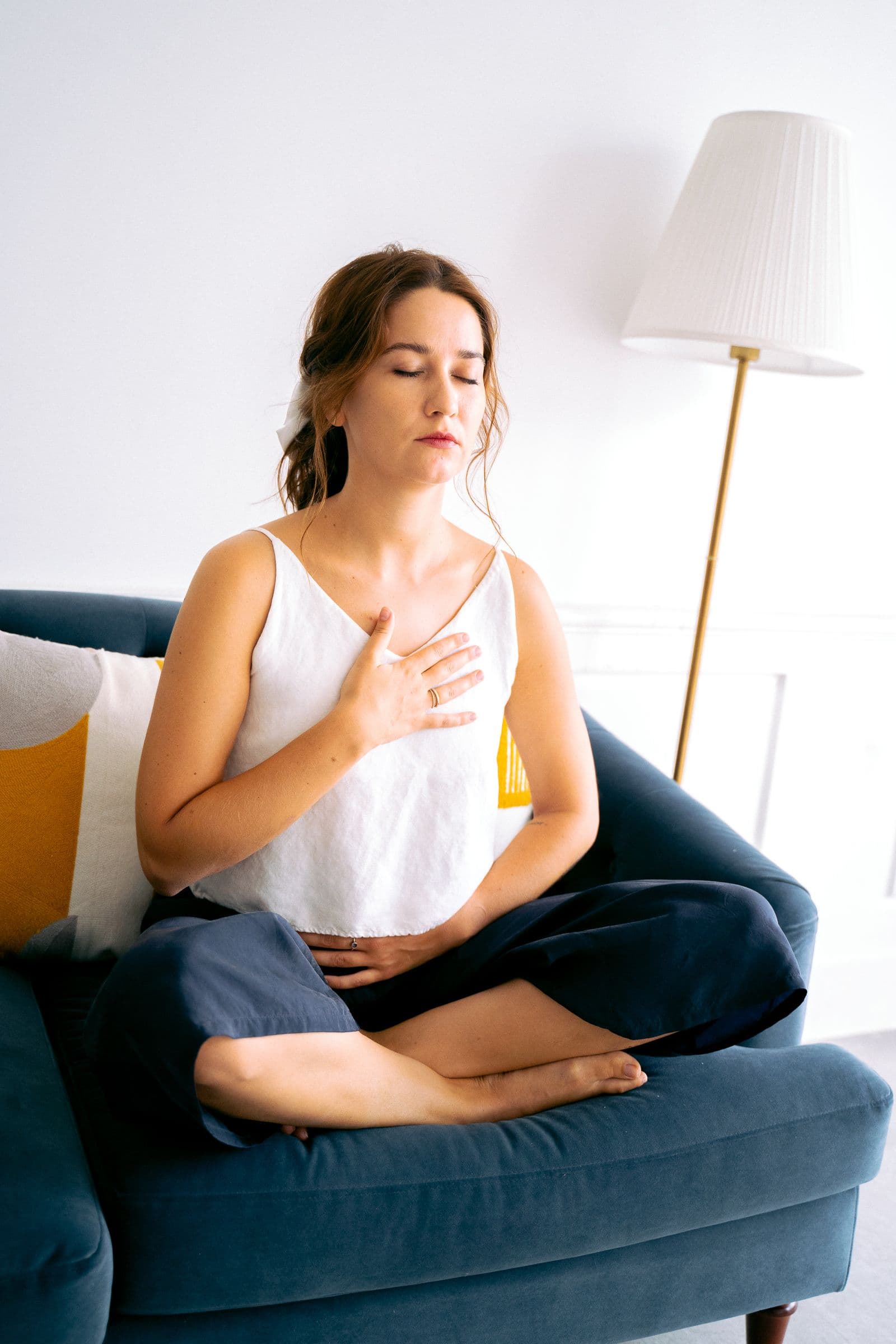
Sit or lie somewhere comfortable, with your shoulders loose and your feet supported. You can close your eyes or rest them on a spot in front of you. Put one hand on your belly if that helps you notice the movement.
Keep the effort light. You aren't trying to take the biggest breath possible; you're trying to breathe slowly and comfortably. If you feel dizzy, lightheaded, or more anxious at any point, stop and breathe normally. There is no benefit in forcing it.
Exercise 1: Slow Belly Breathing
This is the basic technique, and the others build on it.
- Rest one hand on your belly and one on your chest.
- Breathe in slowly through your nose. Let your belly rise gently while your chest stays fairly still.
- Breathe out slowly through your nose or pursed lips, letting your belly soften.
- Aim for a comfortable rhythm. Many people find breathing in for about four counts and out for about six feels natural, but there's no magic number. Use whatever feels easy.
- Continue for one to three minutes, letting your attention rest on the feeling of the breath.
Exercise 2: The Longer Exhale
This is a small tweak to the first exercise that many people find especially settling. The idea is simply to make the breath out a little longer than the breath in.
- Breathe in gently for a count of three or four.
- Breathe out slowly for a count of five or six, as if you're fogging a mirror without making a sound.
- Pause naturally at the bottom of the breath if you like, but don't hold your breath deliberately.
- Repeat for about ten breaths, then return to normal breathing and notice how you feel.
Exercise 3: Counting Your Breaths
When your mind is busy, giving it a small job can help. Counting breaths is a simple way to do that.
- Breathe normally and count each out-breath: one on the first, two on the second, and so on up to ten.
- When your attention wanders, which it will, just notice and start again at one. That isn't failing; noticing is the exercise.
- Do two or three rounds. If ten is too long, count to five.
A Five-Minute Routine
Here's one way to combine the exercises. Adjust the timing to suit you.
- Minute 1: settle in, relax your shoulders and jaw, and breathe normally
- Minutes 2–3: slow belly breathing (Exercise 1)
- Minute 4: longer exhale (Exercise 2)
- Minute 5: count your breaths (Exercise 3), then sit for a few more seconds before you get up
When to Use Them
Breathing exercises work best when you practice them at a calm moment, so they're familiar when you need them. Try them at a few predictable points: after you sit down at your desk, before a difficult conversation, in the car before you walk into the house, or as part of a short wind-down at night. How to reduce everyday stress in 10 minutes or less has other quick resets, and what to do when you feel overwhelmed uses a minute of slow breathing as the first step.
To make it stick, attach it to something you already do, such as after you brush your teeth.
If Breathing Practice Doesn't Feel Right
A few things can make slow breathing uncomfortable, and most have simple fixes. If you feel lightheaded, you're probably breathing too deeply or too fast; return to gentle, quiet breaths. If focusing on your breathing makes you feel tense or stirs up unpleasant thoughts, try keeping your eyes open, breathe out through your mouth, or switch to a different reset such as a short walk.
NCCIH also notes rare reports that certain relaxation techniques might cause or worsen symptoms in people with epilepsy, certain psychiatric conditions, or a history of abuse or trauma. If any of those apply to you, or if you have a heart or lung condition, talk with your healthcare provider before starting a new practice. NCCIH recommends telling your providers about any complementary health approaches you use.
Frequently Asked Questions
Slow breathing is a simple, free way to give yourself a pause. Start with belly breathing, try the longer exhale, use counting when your mind is busy, and keep the effort gentle. Practice when you're calm so the skill is there when you're not, and if it makes you feel worse or if stress keeps building over weeks, reach out to a healthcare professional instead of pushing through.
When to Get Support
Breathing exercises are a self-care practice, not a treatment for any condition. If a technique increases your anxiety or brings up intrusive thoughts, stop. If you have a heart or lung condition, epilepsy, a psychiatric condition, or a history of trauma, talk with your healthcare provider before starting. And if stress or anxiety feels constant or is getting in the way of daily life, consider talking with a doctor or a licensed mental health professional; NIMH's guide explains how to find help.
Sources
- NCCIH (NIH) — Relaxation Techniques: What You Need To Know
- National Institute of Mental Health — I'm So Stressed Out! Fact Sheet
- CDC — Managing Stress
General wellness information, not medical advice. Talk with a qualified healthcare professional about your own situation.
If you like short, repeatable calming habits, the Mental Wellness Guide collects calm-habit routines and mindset tools, with a matching planner and 30-day system.
Explore the Mental Wellness GuideRelated Articles
Practical Ways to Reduce Everyday Stress in 10 Minutes or Less
You don't need a free afternoon to take the edge off a stressful day. Here are small, realistic resets you can do in two to ten minutes, and how to choose the right one.
What to Do When You Feel Overwhelmed: A Step-by-Step Reset
Too much to do and no idea where to start? Here's a calm, practical reset you can run through in about fifteen minutes, plus how to tell when it's time to ask for support.
Progressive Muscle Relaxation for Beginners: A Step-by-Step Guide
Progressive muscle relaxation means tensing and then releasing one muscle group at a time. Here's a beginner-friendly walk-through, a script you can follow, and the cautions worth knowing first.